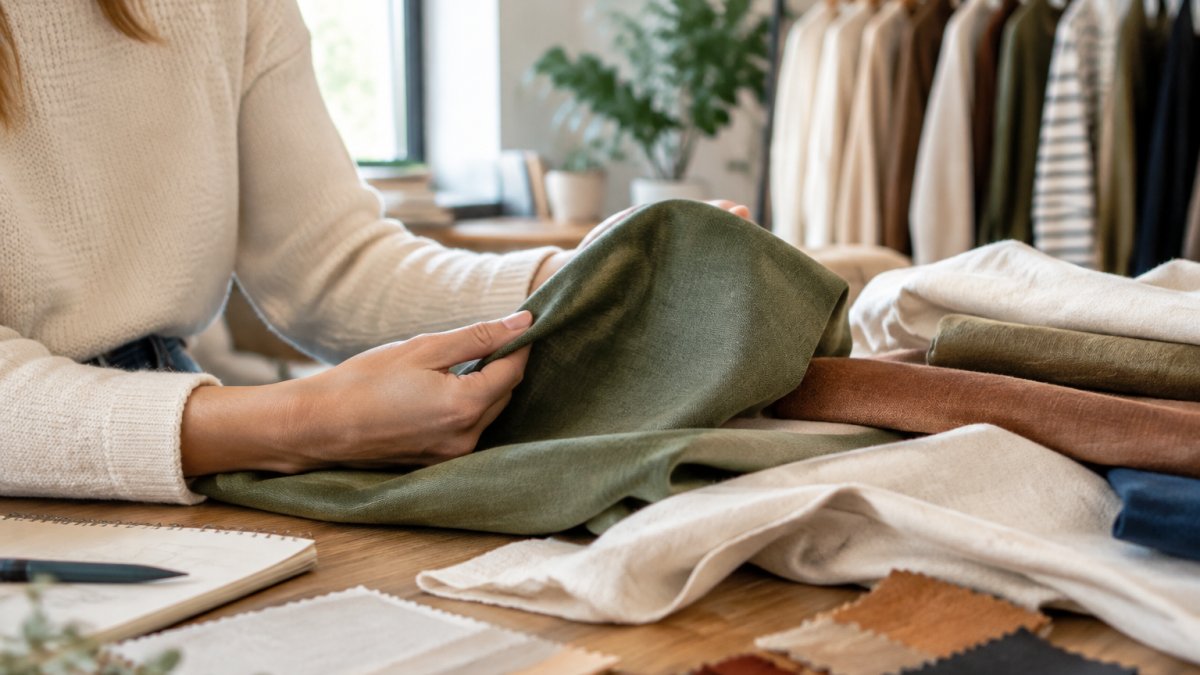
How to Identify High Quality Clothing Fabrics
Last Updated: November 8, 2026
Quick Summary
Judge clothing fabrics by fiber content, weave or knit structure, weight, and finish, matched to what the garment is meant to do. Check the care label first, then weigh, rub, scrunch, and stretch the fabric by hand to test density and recovery. Quality fabric feels substantial, springs back when scrunched, and returns to shape when stretched.
- Read the care label before the price tag, since fiber percentages and care instructions reveal how a garment will age.
- Scrunch fabric and let go: quality fabric springs back while cheap fabric stays creased.
- Long-staple cotton labeled Pima or Supima feels silkier and resists pilling better than ordinary upland cotton.
- Online, look for stated fiber percentages, fabric weight in terms like 120 gsm, and close-up weave photos.
- A burn test on a loose thread shows natural versus synthetic fiber but cannot judge weave or weight.
Table of Contents
- Start With the Care Label, Not the Price Tag
- How to Identify High Quality Clothing Fabrics by Hand
- How to Identify High Quality Clothing Fabrics Online
- The Best Quality Fabrics for Clothes That Last
- What Fabrics to Stay Away From
- Fabric Quality Is Not Garment Construction
- Shop House of Caelo Pieces That Pass the Fabric Test
- Frequently Asked Questions
Start With the Care Label, Not the Price Tag
Most shoppers assume a higher price means better fabric. That assumption fails more often than it holds. The care label tells you more about how a garment will age than the number on the tag ever will. Reading labels before price tags is a useful habit for any shopper.
Fabric quality is the sum of fiber content, weave or knit structure, weight, and finish, judged against what the garment is meant to do. A heavy cotton tee and a silk kimono can both be excellent. They just need different things from their fabric.
Here is what a label actually tells you:
- Fiber percentages: 100% linen behaves nothing like a 55% cotton, 45% lyocell blend. Both can be good. They age differently.
- Fiber order: ingredients are listed by weight, so the first fiber dominates the hand and drape.
- Care instructions: "Dry clean only" on a casual piece is a warning about how it will wear, not just how to wash it.
- Origin and maker notes: not proof of quality, but a signal that someone thought about the material.
One more thing the label won't tell you: fiber type alone doesn't settle quality. NPR's 2026 guidance on spotting quality clothing makes the case that the material has to suit the garment's purpose, not just carry a premium name.
How to Identify High Quality Clothing Fabrics by Hand
Learning how to identify high quality clothing fabrics by hand takes about thirty seconds per garment once you know what to feel for. The trick is doing three checks in order: weight and density, then recovery, then surface. But the checks only work if you adjust them to the fiber in front of you, cotton, wool, linen, silk, and synthetics each fail in different ways.
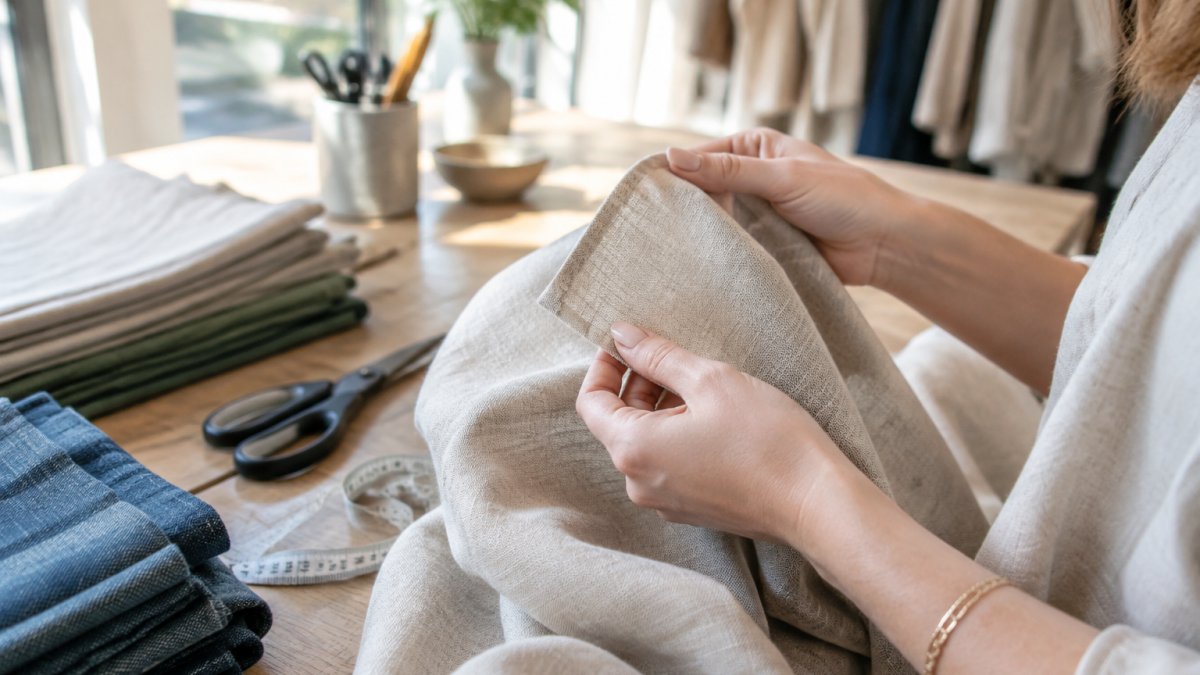
The Touch Test: Weight, Density, and Recovery
Fabric hand is the way a material feels against your skin: its softness, its texture, its temperature. Good fabric feels substantial without feeling stiff.
Try this sequence:
- Weigh it in your hand. Does it hang with some body, or does it feel like tissue paper?
- Rub a section between thumb and forefinger. You want a tight, even surface, not a loose, slippery one.
- Scrunch it and let go. Quality fabric springs back. Cheap fabric stays creased.
- Stretch a small section gently. It should return to shape, not bag out.
Recovery is the quiet hero here. A knit that doesn't recover will sag at the elbows and knees within weeks.
Fiber-Specific Inspection: What Quality Looks Like for Each Material
General rules only take you so far. Here is what to look for in the five fibers you will meet most often.
Cotton. Good cotton feels smooth and dense, not fuzzy or thin.
Wool. Quality wool feels springy and slightly cool to the touch, not scratchy or limp. Squeeze a fold, it should bounce back.
Linen. Good linen feels crisp and dry, with a slightly irregular, slubby texture that is part of its character.
Silk. Quality silk has a soft, uneven luster, not a hard, uniform shine.
Synthetics (polyester, nylon, acrylic). Good synthetics are engineered to mimic natural fibers: they feel smooth, recover well, and have a matte or soft sheen.
Watch out: a fabric can pass the touch test but still be poorly finished; always check seams and hems as well.
What Your Eyes Should Catch: Weave, Sheen, and Irregularities
Hold the fabric up to the light. An even weave shows a consistent grid of yarn with no thin patches. A sloppy weave shows gaps, slubs, and wandering threads.
Then check the sheen. Natural fibers like silk and linen have a soft, uneven glow. A hard, uniform shine on a "silk" piece usually means a synthetic blend.
Look for these red flags:
- Loose threads along the selvage or seams
- Fabric gaps where you can see through an opaque garment
- Color that shifts unevenly across a panel
- Pilling already forming on a new piece
How to Identify High Quality Clothing Fabrics Online
Shopping online removes your hands from the equation, so you have to read like an inspector. How to identify high quality clothing fabrics online comes down to three habits: read the full fiber breakdown, look for weight or density details, and study the close-up photos. But you also need a system for judging what you cannot touch.
Reading Fabric Descriptions and Fiber Blends
A listing that says only "soft fabric" is hiding something. A good listing names the fiber blend, the weight or feel, and how the piece drapes.
Watch for these phrases:
- "Premium cotton" with no percentage: ask what the blend is.
- "Silk-touch" or "satin finish": usually polyester.
- "Breathable" with no fiber named: check the label photo.
A blend isn't automatically worse. A cotton-lyocell mix can drape beautifully and stay cool. The point is knowing what you're buying.
A Checklist for Evaluating Online Listings
Use this checklist before you add to cart:
- Fiber percentages are stated. If the listing hides the blend, assume the worst.
- Fabric weight or density is mentioned. Look for terms like "midweight," "heavyweight," or "120 gsm." Numbers are better than adjectives.
- Close-up photos show the weave. Zoom in, can you see individual yarns? A blurry photo often hides a loose weave.
- The garment is shown on a model and flat. This helps you judge drape and structure.
- Reviews mention how the fabric wears over time. Search reviews for "pilling," "stretched out," or "shrunk."
- The return policy is clear. If you cannot return it, do not risk it.
Watch out: a listing can have all the right words and still ship a poor garment; check the return policy before you buy.
Simple At-Home Tests and Their Limits
You can learn a lot from a fabric sample or a garment you already own. Just know what each test can and can't prove.
| Test | What It Shows | Its Limit |
|---|---|---|
| Burn test on a loose thread | Natural vs. synthetic fiber | Can't judge weave or weight |
| Hold up to light | Opacity and weave evenness | Doesn't reveal recovery |
| Stretch and release | Shape retention | Only tests one spot |
| Wash a sample | Shrinkage and colorfastness | Takes time and a spare piece |
The burn test is the most useful of these. Natural fibers like cotton, linen, and silk smell like burning paper or hair and leave soft ash. Synthetics melt into a hard bead. It tells you what a fiber is, not whether the garment was well made.
The Best Quality Fabrics for Clothes That Last
The best quality fabrics for clothes are the ones matched to the garment's job. There is no single winner.
- Linen: breathable, gets softer with wear, wrinkles by design. Ideal for warm-weather pants and shirts.
- Wool: holds shape, resists odor, and drapes with structure. Best for suiting and cool-weather layers.
- Silk: lightweight with natural sheen and beautiful drape. Best for layering pieces and evening wear.
- Cotton: durable and easy to care for. Best for everyday tees and sweatshirts.
- Lyocell and blends: soft drape with good breathability. Best for casual pants and travel pieces.
Researchers writing in the Clothing and Textiles Research Journal note that experts judge sportswear quality through several methods at once: lab testing, expert assessment, and real wear trials. No single check tells the whole story, and the same applies to everyday clothing.
What Fabrics to Stay Away From
Some fabrics are worth skipping, not because of their fiber name but because of how they're made and finished.
- Thin, loose synthetics that pill within a few wears
- "Silk" or "cashmere" at a suspiciously low price, usually a blended impostor
- Stiff, plastic-feeling knits that don't recover when stretched
- Fabric with a hard, uniform shine that signals a heavy synthetic finish
- Anything that pills on the shop floor, which is a warning sign of early wear
None of these are absolute bans. A well-made synthetic can outperform a poorly made natural fiber. Judge the garment, not just the fiber name.
Fabric Quality Is Not Garment Construction
Great fabric can still become a bad garment. Construction is a separate test, and it's the one most shoppers skip.
Check these points on any piece:
- Seams: flat, even stitching with no puckering
- Stitching density: tight, consistent stitches, not long loose ones
- Finishing: clean hems, bound edges, no fraying inside
- Buttons and zippers: secure, smooth, and aligned
A silk blouse with beautiful drape and crooked seams will still fall apart. Fabric and construction are two different exams. Pass both or walk away. If you're thinking beyond fabric toward fit and comfort for real bodies, our guide to comfortable clothing for women over 40 covers construction and fit in more detail.
Shop House of Caelo Pieces That Pass the Fabric Test
We built our collection around fabrics that hold up to the checks above. Here are a few pieces that show what good material looks like in person.
The Caelo Silk Kimono is made from peace silk from India, with a lightweight, fluid drape. The Caelo Handwoven Linen Slit Pant is a wide-leg pant in handwoven linen with a lightweight, breathable feel. And the Fancy Pants Chambray Wide-Leg Pants pair a 55% cotton, 45% lyocell blend with a soft, lightweight drape.


The hardest part of buying quality clothing isn't spotting good fabric. It's finding pieces that combine good fabric with construction and fit you'll actually wear. That's the problem we set out to solve at House of Caelo, with curated collections built around easy layers, meaningful details, and pieces that move from work to weekend without a second thought.
Frequently Asked Questions
How can you tell if clothing fabrics are high quality by touch alone?
Rub the fabric between your fingers and notice whether it feels substantial or thin and slippery. High-quality clothing fabrics usually have a dense weave you can feel, a soft hand that isn't stiff, and enough weight to drape rather than cling. Squeeze a section and release it: good fabric springs back instead of staying wrinkled. Check the seams and hems too, since loose threads or gaps often show up before the fabric itself fails.
What fabrics should you stay away from when shopping for durable everyday clothes?
Be cautious with very thin, loosely knit synthetics that pill quickly, and with fabrics that feel plasticky or stiff. Inspecting garments for snags, premature peeling, and bubbling can signal early wear. Avoid unlined, sheer fabrics that lack opacity for their stated purpose, and treat any blend with a high synthetic content and no care instructions as a risk. Natural fibers like linen and cotton, chosen for the garment's purpose, tend to hold up better.
Does a higher price always mean better fabric quality?
No. Fiber type alone does not establish quality, and price often reflects branding rather than construction. Quality assessment generally relies on textile testing, expert review, and wear trials rather than price. Look at fiber composition, weave density, and care labels instead. A well-made cotton or linen piece at a moderate price can outlast a costly garment with thin fabric and poor stitching.
How do you check fabric quality when shopping online?
Read the fiber composition and care instructions first, then look for close-up photos of the weave and seams. A reputable listing names the fabric and its blend percentages, explains how it drapes, and shows detail shots. Search customer reviews for words like pilling, shrinkage, or fading. If the description is vague or the photos are only styled shots, ask the brand directly. House of Caelo, for example, lists materials like peace silk and handwoven linen in its product descriptions.